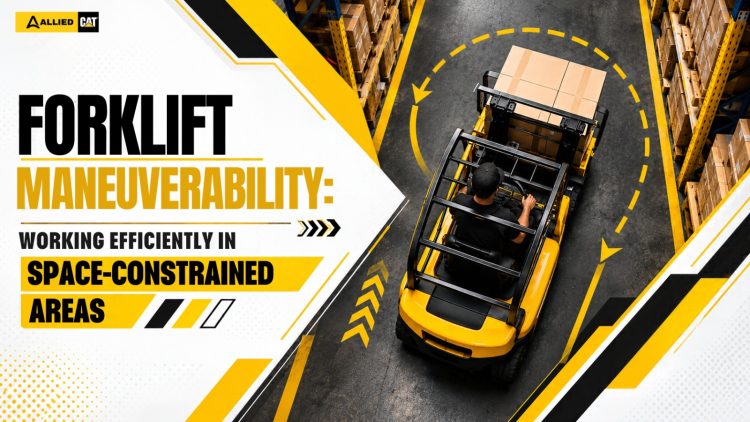
In warehouses, factories, and industrial facilities, space is often tight. Moving materials through aisles, around storage racks, and between workstations can be tough. A forklift helps businesses with these tasks. How well it can move and turn in tight spaces matters when choosing the right machine. Forklift maneuverability refers to how easily a forklift can move, turn, and change direction in a work area. Choosing the equipment helps businesses handle materials smoothly and use their space better.
Why Forklift Maneuverability Matters
In industrial settings, forklifts often need to go around obstacles, carry pallets, and place materials in spots. A machine that turns easily and fits through aisles makes these jobs easier. Good maneuverability is especially useful in warehouses where storage racks are placed together. It also helps in factories and loading areas where many things happen at once. When picking a forklift, businesses should think about their workspace layout and what kind of work the machine will do.
Key Factors That Affect Forklift Maneuverability
1. Turning Radius
This is the amount of space a forklift needs to make a turn. A smaller turning radius can be better for areas, as long as the forklift’s overall size fits the space.
2. Forklift Dimensions
The length and width of the forklift matter a lot. Companies should check if the machine will fit in their aisles, around storage, and in turning zones before deciding.
3. Control
Steering that responds well and controls that are easy to reach help operators guide the forklift safely. How it handles depends on the model and its design.
4. Load Position
The size and how the load is placed also affect movement. Big or uneven loads need room. Operators must follow the manufacturer’s load limits and safety rules when moving things.
Choosing the Right Forklift for Narrow Spaces
Picking a forklift isn’t about lifting power. Businesses need to think about where the machine will work. Start by measuring aisle width and turning space. Think about pallet size, rack height, and where materials need to go. These details help find equipment that fits needs.
It’s also important to check the working surface. What kind of materials will be moved? A forklift good for one place might not work in another. Looking at the maker’s specs can help make choices. For companies looking for a forklift in Pakistan, checking these things helps find the fit for their operations.
How Better Maneuverability Supports Daily Operations
A forklift that fits the workspace helps operators move materials between areas without trouble. It makes loading, unloading, and storing easier. Helps businesses use floor space wisely. Good equipment also means you don’t need to change the layout just to move materials. Good results come from training, smart planning, and following safety rules. Businesses should keep aisles clear, make sure there’s turning room, and help operators see what’s around them. These habits build an organized workplace.
Why Equipment Selection Matters
Every industrial place has needs. Some need forklifts for warehouse pallets; others for factory or loading tasks. Before choosing a forklift, businesses should think about lifting power, machine size, turning radius, and working conditions. Comparing these helps pick a machine that matches space and workload. Engineering and Services Limited (AESL) provides equipment for use. Companies can visit its website to learn more about products and find machines that fit their needs.
Conclusion
Forklift maneuverability is key in material handling where space is tight. Turning radius, machine size, steering, and load position all affect how easy it is to move a forklift around a facility. By checking their workspace and reviewing equipment specs, businesses can choose better. The right forklift supports material moves, helps use space, and keeps daily operations more organized.