

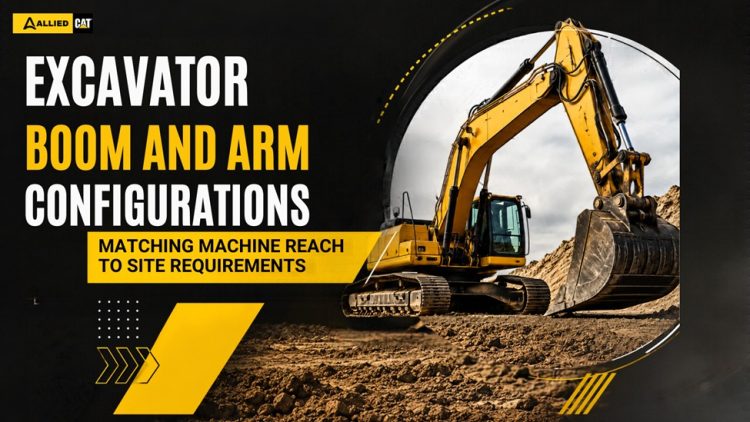
Excavators are important machines in construction, mining, and other earthmoving operations. Their performance depends not only on the machine itself but also on how well its working equipment suits the job. The boom and arm play an important role in determining an excavator’s reach, digging range, and ability to handle different site requirements.
Caterpillar offers a range of excavators designed for different applications, supporting contractors working in demanding environments. Choosing a suitable boom and arm configuration helps businesses match their equipment to the work they need to complete.
Understanding the Excavator Boom and Arm
The boom is the large structure connected to the excavator’s body. It supports the arm and helps position the working equipment at the required height and distance. The arm, also called the stick, connects the boom to the bucket or another attachment. Its movement helps the excavator reach the material, dig, and bring it closer to the machine.
Together, the boom and arm determine how far an excavator can reach and the range of tasks it can perform. Their configuration should match the type of work and the available space at the jobsite.
How Boom and Arm Configurations Affect Machine Reach
Different site conditions require different working ranges. Understanding the required reach before selecting an excavator can help contractors choose equipment that fits their project.
Digging depth: Excavation work may require digging at different depths. The boom and arm configuration should provide sufficient reach to complete the required digging tasks.
Horizontal reach: Some jobs require an excavator to reach material located away from its tracks. The working range should allow the operator to access the required area without unnecessary machine repositioning.
Working height: Loading and material-handling tasks may require the bucket to reach a particular height. The boom and arm should provide the necessary range for the intended operation.
Site restrictions: Construction sites can have limited working space or obstacles that affect machine positioning. Selecting an excavator suited to the available space helps contractors plan their work more effectively.
Matching Excavator Configurations to Site Requirements
Before selecting an excavator, contractors should consider the work involved, the required digging depth, the distance to the working area, and the space available for machine movement.
For example, a project involving deep excavation may have different reach requirements from a job focused on loading material. Similarly, work in a restricted area may require a different equipment choice from operations on a large, open construction site.
Caterpillar offers excavators as part of its wider range of earthmoving machinery. Allied Engineering & Services Ltd. provides access to Caterpillar equipment and support for construction and other heavy-duty applications.
The most suitable configuration is the one that meets the project’s actual requirements while supporting productive and controlled operation. Contractors should review the specifications of the selected machine before making a final decision.
FAQs
1. What is the difference between an excavator boom and an arm?
The boom connects to the machine’s body and supports the arm. The arm connects the boom to the bucket or attachment and helps control its working position.
2. How does boom and arm configuration affect excavator reach?
The configuration influences the machine’s digging depth, horizontal reach, and working height. These factors determine how effectively it can access different areas.
3. What should contractors consider when choosing an excavator configuration?
They should consider digging depth, required reach, working height, site space, and the type of operation.
4. Can one excavator configuration suit every project?
Not necessarily. Different projects have different reach and working-range requirements, so contractors should select equipment according to their specific site conditions.
Conclusion
Excavator boom and arm configurations influence how effectively a machine performs its assigned tasks. By considering digging depth, horizontal reach, working height, and site restrictions, contractors can make more suitable equipment choices. With Caterpillar’s range of earthmoving machinery and support from Allied Engineering & Services Ltd., businesses can explore equipment solutions that match their construction and operational requirements.

